
Should You be Worried About The Wind On Your Wedding Day?
Most couples planning an outdoor wedding spend time worrying about rain and that’s fair enough. A downpour can put a damper on things but here’s the truth no one talks about, wind can be far worse.
While rain is inconvenient, wind has the potential to fully disrupt or even cancel your wedding. It can force your tent to come down, damage decor, shift your schedule, and even put your guests at risk if not managed properly.
If you’re planning an outdoor wedding in Surrey or Sussex, here are the essential things to consider when it comes to windproofing your wedding.
1. Start with Your Tent Supplier
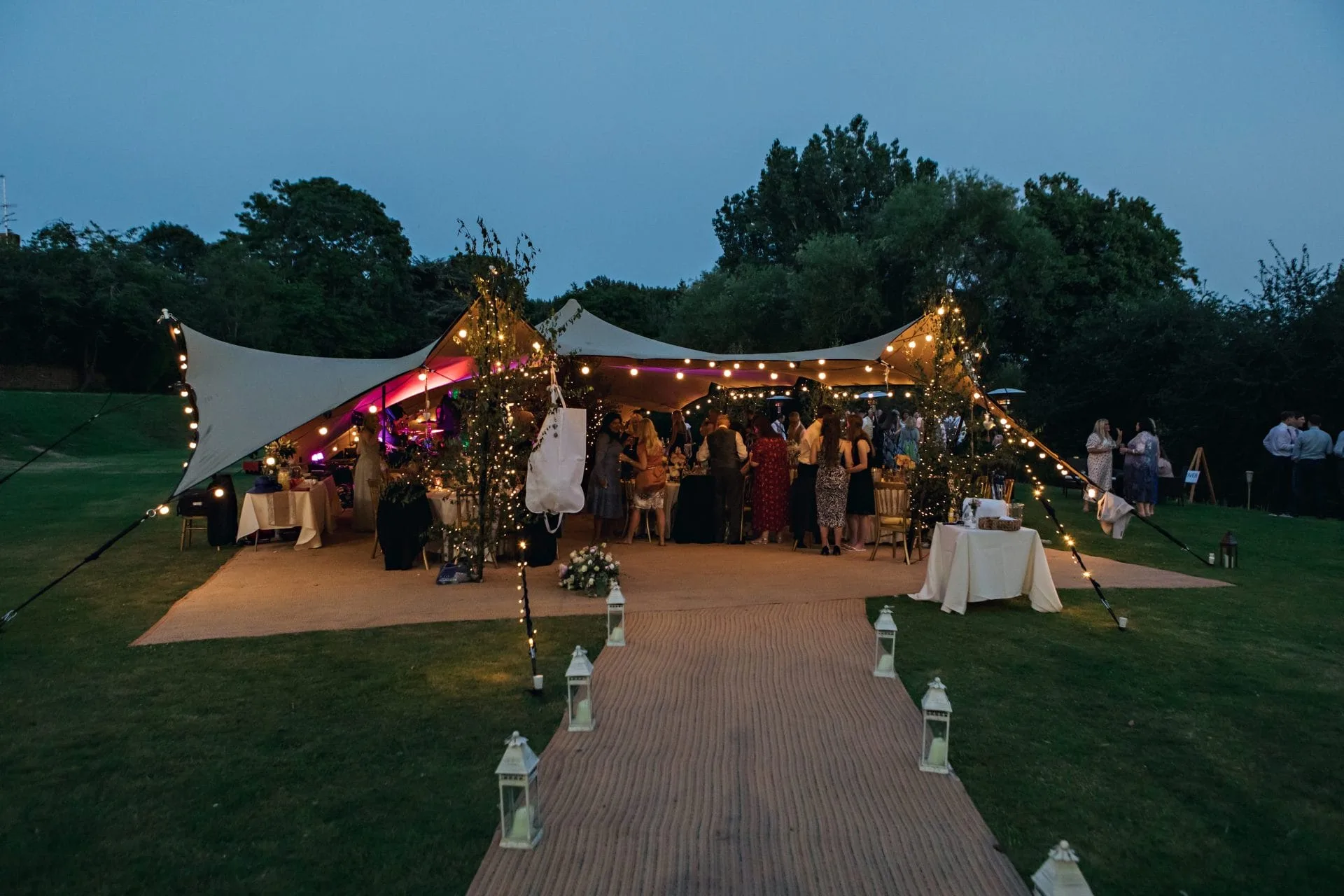
Every tent type has a different wind speed rating and that rating differs between manufacturers and types of tents. Stretch Tents, Tipis, and Bell Tents are surprisingly wind-resistant due to their cone-like shape compared to traditional clear-span marquees. Your first question should be:
“What is the maximum wind speed this tent can safely handle?”
You also need to ask what happens if that wind speed is reached or exceeded. For example, a Tipi might be rated up to 40mph gusts. If gusts hit that level, your tent provider may be legally required to evacuate guests. In extreme cases, tents have had to be taken down mid-event due to safety.
A good supplier will walk you through these details and explain their protocols.
2. Choose a Sensible, Sheltered Location
The site you choose for your tent has a huge impact on how exposed it is to wind. Locations like cliff edges, open fields, or valleys can act as wind tunnels and make conditions much worse. Instead, try to position your tent near natural windbreaks such as tree lines, hedgerows, buildings, or walls, which can offer significant protection. Even moving the tent just 20 metres to a more sheltered spot can dramatically reduce wind impact and help keep everything more stable and comfortable on the dayThe site you choose for your tent has a huge impact on how exposed it is to wind. Locations like cliff edges, open fields, or valleys can act as wind tunnels and make conditions much worse. Instead, try to position your tent near natural windbreaks such as tree lines, hedgerows, buildings, or walls, which can offer significant protection. Even moving the tent just 20 metres to a more sheltered spot can dramatically reduce wind impact and help keep everything more stable and comfortable on the day
3. Face the Tent Away from the Wind
It’s a shame, but the side of the tent with the best view is often the same side the wind comes from. If a stormy forecast looms, your tent supplier may need to rotate the tent 180 degrees, placing the back (closed side) into the wind.
This provides a solid wind block and reduces uplift inside the structure. It may not be ideal from a view perspective, but it’s far better than having your tent compromised.
4. Remember: Setup and Takedown Days Matter Too
Your tent isn’t just exposed to the weather on your wedding day.
It will likely be up for several days before and after and those are days where strong winds can still cause serious issues.
If your supplier planned to install on a Wednesday but the forecast is calling for high winds, they may have to delay until Thursday or bring it forward. This could impact your schedule for decorating, deliveries, or styling. It’s inconvenient, yes, but it’s always about safety first. Be prepared for flexibility if the weather changes.
5. Plan Your Decorations Accordingly
Windy weather doesn’t just affect tents — it also wreaks havoc on the small details.
- Name cards, napkins, table florals, signage — all of these need to be secured
- Use cable ties, adhesive putty (Blu Tack), or floral wire to keep things in place
- Create natural interior windbreaks using sofas, benches, or decorative partitions between lightweight items
- Avoid tall or top-heavy centrepieces that could blow over
Your styling team or florist will appreciate being made aware of the wind forecast in advance too.
6. Ask About Wind Contingency Options
Not all tent companies are proactive, but good ones should offer a wind plan. Ask them:
- Do they use extra straps or reinforcements for high-wind setups?
- Can they add walls or side panels to a Stretch Tent to create extra shelter?
- Do they have someone on call during the event if conditions worsen?
Modern Stretch Tents are often sold as open canopies, but many can now have walls added for stability in rougher weather. These act like a shield and can stop dangerous flapping that weakens the structure.
7. Treat Wind Seriously When Planning
Wind is often overlooked because it’s invisible — but its effects are not. It’s one of the few weather risks that can genuinely stop a wedding from going ahead if not handled properly.
So here’s your quick checklist:
- Ask your supplier about wind ratings and evacuation protocols
- Pick a sensible location, ideally with wind cover
- Rotate the tent if needed for wind direction
- Plan for setup/takedown weather windows, not just your wedding day
- Secure decor and styling elements
- Confirm what wind contingency measures your tent company offers
If the forecast looks blustery, being prepared can be the difference between a windy inconvenience and a wedding catastrophe.
Need Help With a Windy Wedding Setup?
We’ve worked in every weather condition Surrey and Sussex can throw at us. If you’re unsure about your site, structure, or plan, we’re always happy to chat through wind-rated options and contingency plans.
Get in touch and we’ll help you prepare for anything — even a hoolie.